Waterproof vs Water-Resistant: The AS 3740:2021 Materials Lists and the Compatibility Chain

AS 3740:2021 sorts every material in a wet area into one of two groups: waterproof, or water-resistant. The list is short and it is in Clause 3.3. Most failures happen not because a material is on the wrong list but because two compliant materials were never checked against each other. This article reproduces the lists as a working reference and walks the compatibility chain in Appendix E.
1. The distinction, and why it decides the build-up
A waterproof material is deemed to stop water on its own. A water-resistant material does not degrade when wet, but it does not stop water; wherever the NCC requires an element to be waterproof, a water-resistant material needs a waterproof layer somewhere in the assembly. Tiles, plasterboard and fibre cement are all water-resistant. None of them is a waterproofing system.
Which elements must be waterproof and which merely water-resistant is decided by the NCC, not the standard: Housing Provisions Clauses 10.2.2 to 10.2.5 for a Class 1 house (shower walls waterproof to 1 800 mm, shower floors waterproof, timber floors outside the shower waterproof, concrete floors outside the shower water-resistant, and so on), and Specification 26 of Volume One for Class 2 to 9 buildings. AS 3740 then tells you which materials satisfy each label.
2. Materials deemed waterproof (Clause 3.3.1)
| Material | Condition in the standard | Typical use |
|---|---|---|
| Stainless steel | None stated | Preformed trays, linear drain channels |
| Copper | Not less than 99.9% copper, designation 110 or 122 to AS 1566 | Sheet trays and flashings |
| Flexible waterproof sheet flooring | Sealed and welded joints, meeting AS/NZS 4858 | Continuous vinyl floors; no waterstop needed at the room doorway (Note 1 to 3.3.1) |
| Wet-area membranes | Meeting AS/NZS 4858 | Liquid-applied and sheet membranes, the usual system |
| Glass | Meeting AS 1288 | Shower screens and panels |
| PVC | Meeting AS 3500.2 | Drainage components |
Two traps in that list. Glass and PVC are "waterproof" as materials, which is why a screen or a waste is not itself a weak point; the junctions around them are, and those are governed by Clauses 4.8 to 4.12. And Clause 4.16 is explicit that welded resilient flooring which does not meet AS/NZS 4858 is water-resistant, not waterproof, so a vinyl floor is only a waterproof floor if the product and the welding both meet the standard.
3. Water-resistant substrates (Clause 3.3.2)
| Location | Substrate | Standard |
|---|---|---|
| Walls | Concrete | AS 3600 |
| Walls | Cement render | No product standard; preparation to Clause 4.4.5 |
| Walls | Fibre cement sheeting | AS/NZS 2908.2 |
| Walls | Water-resistant plasterboard | AS/NZS 2588 |
| Walls | Masonry | AS 3700 |
| Walls and floors | Structural plywood | AS/NZS 2269 series, installed to AS 1684.2, .3 or .4 |
| Floors | Concrete | AS 3600 and AS 2870 |
| Floors | Compressed fibre cement sheeting | AS/NZS 2908.2 |
| Floors | Fibre cement sheeting on a structural floor | AS 2908.2 |
The closing sentence of Clause 3.3.2 is the one that matters: the substrate material must not degrade when exposed to moisture. Standard plasterboard fails that test, which is why it is not on the list.
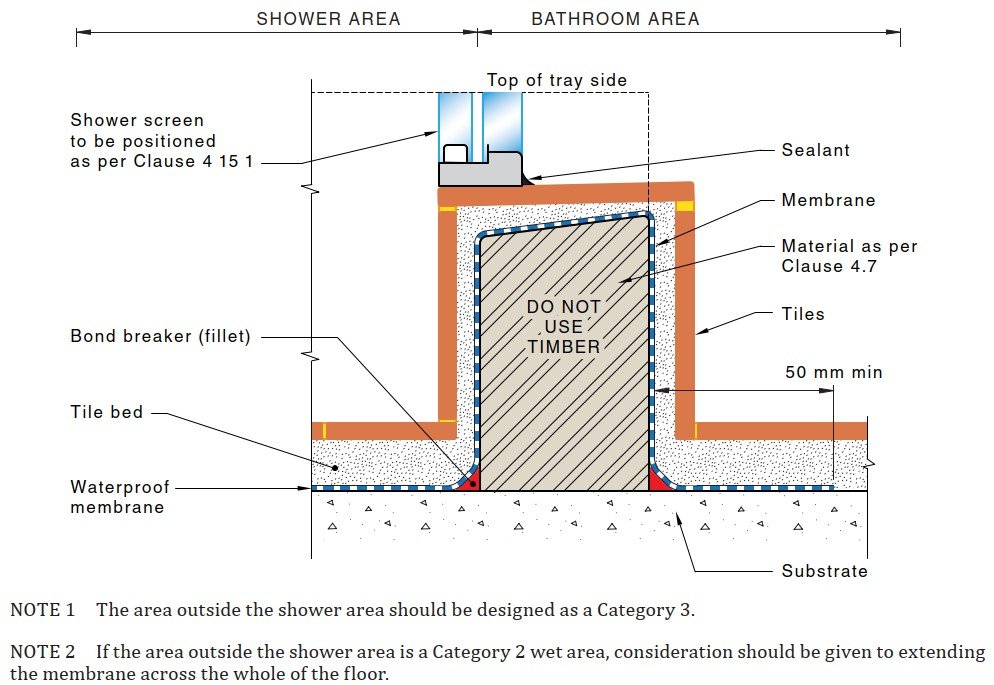
Figure 4.6.2 — Membrane termination at shower with hob
4. Water-resistant surface materials (Clause 3.3.3)
| Location | Surface material | Condition |
|---|---|---|
| Walls | Thermosetting laminated sheet | AS/NZS 2924.1 |
| Walls | Pre-decorated fibre cement | AS/NZS 2908.2 |
| Walls | Ceramic and stone tiles | On a Clause 3.3.2 substrate |
| Walls | Flexible sheet wall material with sealed joints (sheet vinyl) | On a Clause 3.3.2 substrate |
| Walls | Sanitary-grade acrylic or polymer linings | None stated |
| Walls | Glass | AS 1288 |
| Floors | Ceramic and stone tiles | On a Clause 3.3.2 substrate; porous tiles can discolour from water migration |
| Floors | Flexible sheet flooring with sealed joints (sheet vinyl) | Installed to AS 1884 (the installation standard for resilient flooring) |
| Floors | Concrete | None stated |
5. Sealants, fastenings and adhesives (Clauses 3.5 to 3.7)
Sealants must be waterproof or water-resistant as the location demands, flexible, mould-resistant and compatible with the materials either side. Junction sealants are typed (Type 1, 2 and 3 in Clause 4.11.1) by where they are used.
Fastenings for sheet linings must be compatible with the sheet and spaced so they do not compromise the membrane; fibre cement needs screws made for it.
Adhesives must be compatible with what they bond. The standard's own example: a tile adhesive must be water-resistant to bond tiles to a waterproof or water-resistant surface.
6. The compatibility chain (Clause 3.2 and Appendix E)
Clause 3.2 is one sentence: components throughout the entire waterproofing system shall be compatible. Appendix E explains what "entire" means and warns of the symptoms of getting it wrong: bubbling, blistering, retarded curing and delamination. Figure E.1 draws the chain. Read it as a checklist of interfaces, each of which needs a manufacturer's statement or a tested system behind it:
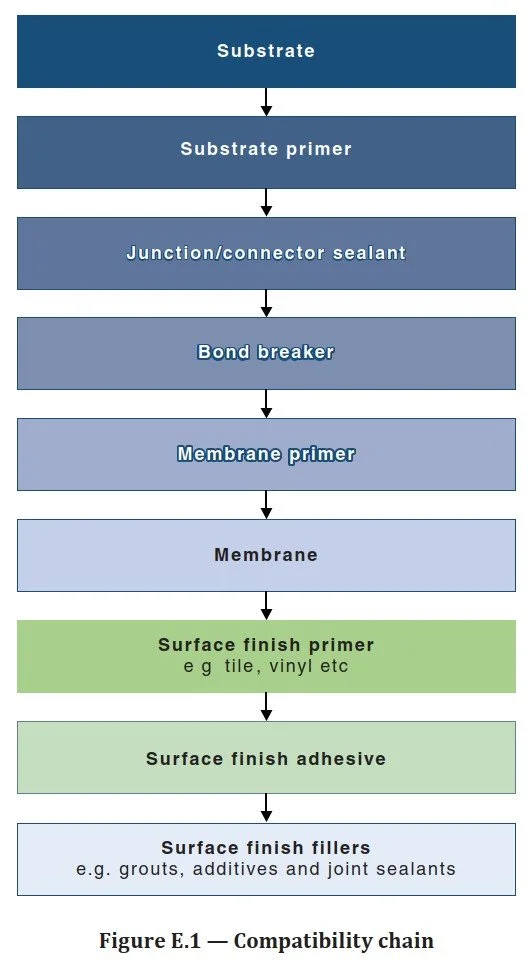
Figure E.1 — Compatibility chain
Substrate: must accept the primer and the membrane, and be dry enough (Appendix F for concrete and timber subfloors).
Substrate primer: chemically compatible with the membrane; porous and non-porous substrates may need different primers (E.2.2).
Junctions and connectors: membrane terminations, transitions and junction sealants compatible with each other (E.2.3).
Bond breakers and fillets: matched to the elasticity class of the membrane and chemically compatible with it (E.2.4; Table 4.10).
System components: waterstops, drainage control flanges, fittings and coves, compatible with the junction sealants or isolated by a primer that suits both.
Membrane: compatible with the substrate, the components and the finish above it.
Surface-finish primer or isolation underlay: where the membrane is not itself a suitable substrate for the finish.
Surface-finish adhesive: must not compromise the membrane or the drainage at membrane level; rated for wet areas.
Fillers, grouts and sealants: must not change the membrane's elasticity class or block sub-surface moisture movement.
Penetration sealants: compatible with the membrane and the fixture (Clause 4.12).
The practical rule that falls out of the chain: specify the membrane manufacturer's full system (primer, bond breaker, sealant, and the adhesive they have tested over it), or obtain written compatibility statements for every substitution. "Wet-area rated" on a tub of adhesive is not a compatibility statement.
7. The failures the chain predicts
| Failure | Broken link | Prevention |
|---|---|---|
| Membrane lifting from the substrate | Primer not matched to a non-porous substrate, or substrate too wet | Primer per substrate type; Appendix F moisture test |
| Cracked membrane at wall–floor junctions | Rigid fillet under a Class III membrane | Bond breaker to Table 4.10, matched to elasticity class |
| Tiles debonding months later | Adhesive attacking or not keying to the membrane | Adhesive from the tested system, or a written compatibility statement |
| Blistering under the membrane | Solvent-based product over a water-based one, or vice versa | Single-manufacturer system; check the data sheets for solvent compatibility |
| Leak at a waste or tap | Flange or penetration sealant not compatible with the membrane | Flanges and sealants from the system; Clauses 4.3 and 4.12 |
On timing: these defects usually surface within the first year or two. That is inside the statutory warranty period in every state (NSW: two years for general defects and six for major defects under the Home Building Act 1989; Queensland: 12 months non-structural and six years six months structural under the QBCC scheme; Victoria: the implied warranties in the Domestic Building Contracts Act 1995, with a 10-year limitation from the occupancy permit). A compatibility failure is a builder's problem before it is the owner's.
8. Worked selections
Standard bathroom, timber-framed house
Walls: water-resistant plasterboard (AS/NZS 2588) or fibre cement (AS/NZS 2908.2); floor: compressed fibre cement on joists, or structural plywood to AS/NZS 2269 installed to AS 1684. Timber floors outside the shower must be waterproof under Housing Provisions 10.2.3.
Membrane: liquid-applied to AS/NZS 4858, with the manufacturer's primer, bond breaker and flanges. Membrane up shower walls to 1 800 mm (Clause 4.6.3).
Finish: ceramic tiles on the tested adhesive; flexible sealant at all junctions.
Sheet vinyl laundry or accessible bathroom
Substrate: compressed fibre cement or concrete, surface profile prepared to Clause 4.4 (AS 1884 Appendix E for concrete surface profile).
Flooring: welded sheet vinyl meeting AS/NZS 4858, so the floor itself is the waterproof layer and no doorway waterstop is needed; installed to Clause 4.16 (overlap, welded or push-in waste methods, Figures 4.16(A) to (C)).
If the vinyl does not meet AS/NZS 4858, an AS/NZS 4858 membrane goes under it wherever the NCC requires waterproofing.
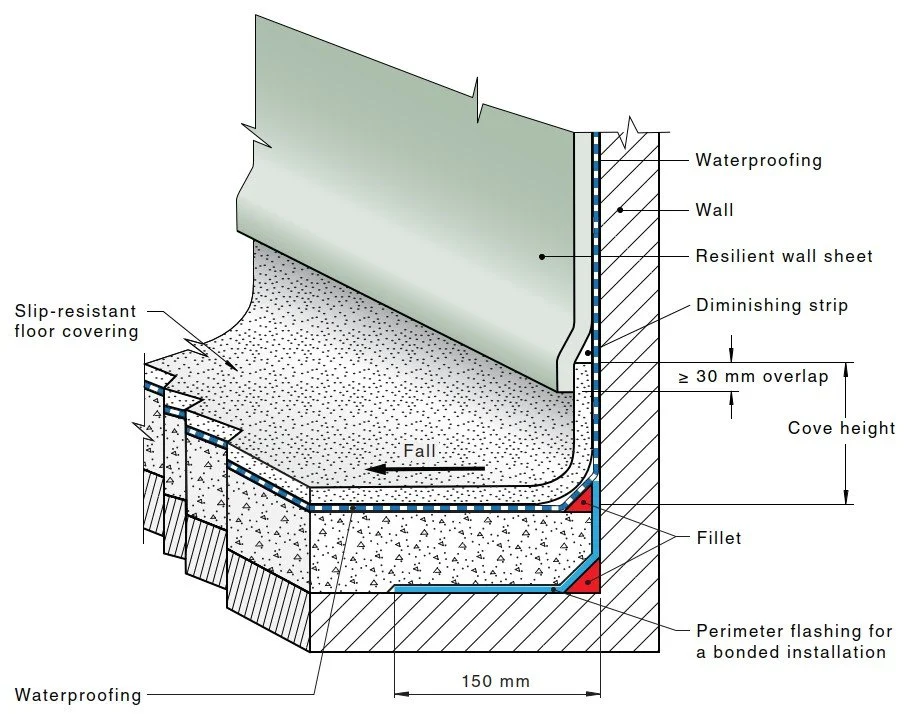
Figure 4.16(A) — Vinyl installation — Overlap method
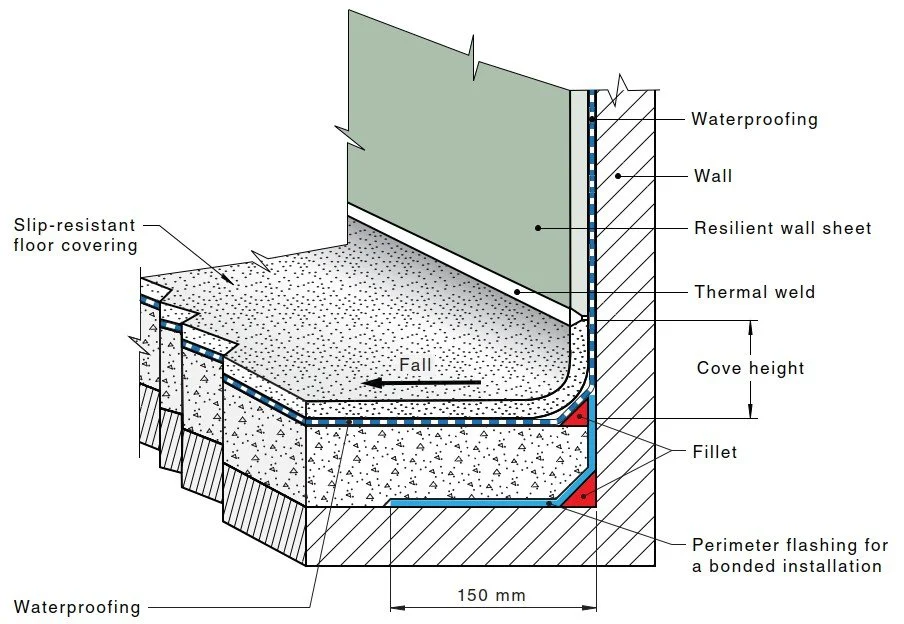

Figure 4.16(C) — Vinyl installation — Push-in vinyl sheet waste
Check it against the source
AEC Assistant searches the full text of NCC 2025 and NCC 2022 and Australia-wide planning information, resolves the edition in force for the state you are working in, and returns the clause that applies to your project with the source alongside it. Paid plans add deeper knowledge of the standards the code references. Try it free. No credit card.
Sources: AS 3740:2021 Section 3, Clauses 4.10 to 4.16 and Appendices E and F (Standards Australia); ABCB Housing Provisions Part 10.2. Figures reproduced for review and commentary. Part 1 of this series: AS 3740:2021 explained. First published 1 September 2026; rebuilt around the standard's own tables 2 September 2026.